|
 |
|
BURNERS ******************************************************************************************** |
|
|
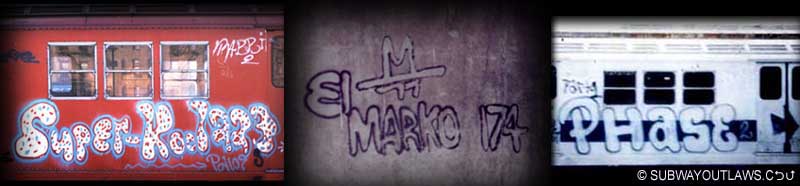
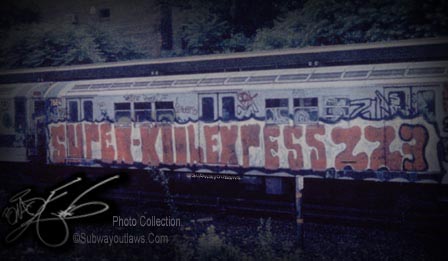
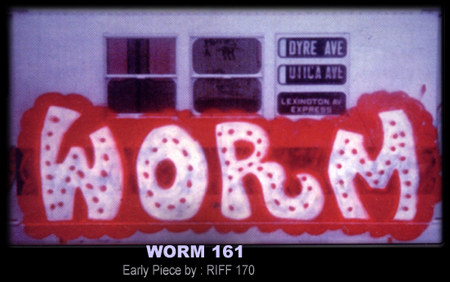
The Beginning of an Artistic Generation There is no way to pinpoint the first masterpiece ever done. The early writers we have spoken with, however all agree, that the first subway painting was done on an IRT Subway train by SUPER KOOL 223. Although, there were outlined signatures traced back on the subways before SUPER KOOL 223’s masterpiece, by such writers as EL MARKO 174, LIONEL 168, and CLIFF 159. However, It was SUPERKOOL 223’s discovery of a larger spray nozzle
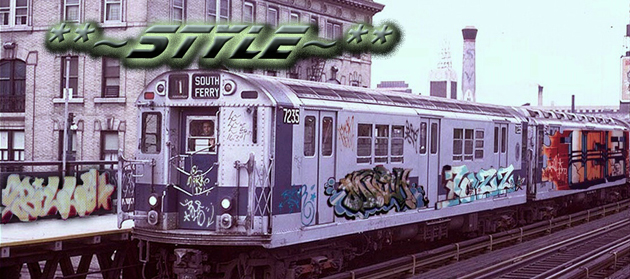
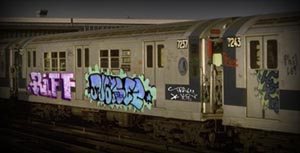
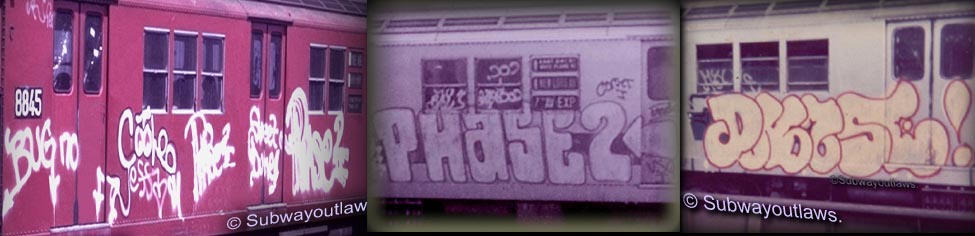
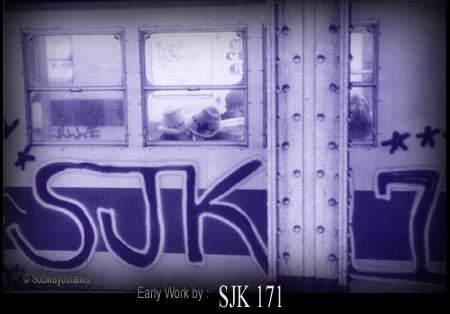
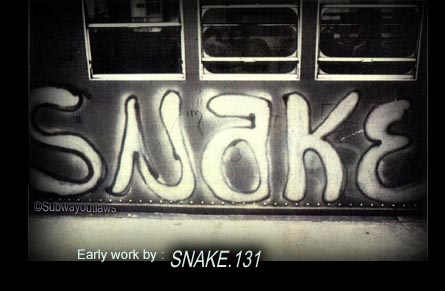
that allowed many of his work to be filled in, at a faster pace. The beginning concept of a masterpiece was to allow one writer to stand out from hundreds of signatures, which appeared on the same subway car. This would introduce the era of the STYLE MASTERS. Improvements on lettering became very necessary in distinguishing one from hundreds of writers who duplicated SUPERKOOL 223’s original approach to painting. Writers such as PHASE 2, RIFF 170, TRACY 168, PEL, MAD 1, FLINT 707, and PISTOL were some of the first, of many who created innovative elaborate letterings. As
masterpieces similar to Manhattan writers, whom first introduced the whole concept of “getting up”. Subway outlaws salutes the artists who have shaped this art form. The following photographs are some of our favorites...so enjoy the tour!
*****************************************************************************************************************************************
THE PIONEER OF STYLE's
I’ll tell you a story about two young boys back in the 1970’s, that did not
have access to the museums. Their eyes weren’t allowed the beauty of a
Monet or Picasso. They were just two young street kids, with nowhere to
turn. Something was eating them alive. A need for beauty, a desire
to appreciate something beyond bricks yearned to be awakened. One train
that rode south bound, along Manhattan's 10th Avenue's cobbled streets during
the 70's, passed P.S. 98, on towards the projects where Lew Alcindor (Kareem
Abdul-Jabbar) played ball as a boy.
I was one of those young kids that knew Graffiti was art. I saw it as beauty on the old cold trains. It was an expression to someone like me, who did not have an outlet. Every morning I went with my pad in hand and tried to scribble down the names, like PIPER 1, with his thin lines and dots for designs, and JACE 2, with his massive thick lettering (that eventually had to be sawed down to J - 2). I had the good fortune of watching rough pieces, turn into masterpieces.
I saw the coming of APOLLO 07, STAY HIGH 149,
FRANK 207, JULIO 204 and far too many more to
mention. As a boy, these were my artistic heroes like what Seraut was to
a child in his day. Mine were more than artists, they were rebels,
rolling the streets at night, putting color where gray mixed continually in
New York. Their art spoke. It whispered, poverty does not breed
ignorance. Their art screamed, and I mean screamed loud to me! The
giant foam caps offered me hope, that I could be bigger than what I was.
Graffiti is an art, yes a rebel art, an inner city art. Keith Herron
taught the world that!
As a grown man, I now look back at those days with joy. I wonder where
the artists have faded to. I wonder if they will ever know that it is
they, that made me go see the Mona Lisa in Paris, the Van Gogh museum in
Holland. It is they that made me look inside and find my art, my self
worth. They are the ones that cultivated the conviction inside of me, to
be who and what I am to a certain degree.
My final words to the taggers, the burners, and even the toys like me, thank you! Frank M. Ahearn
|